

Roux-en-Y gastric bypass is a well-established metabolic and bariatric procedure that can help patients lose weight and improve many obesity-related health conditions. The operation creates a small stomach pouch and connects it to a lower portion of the small intestine, so food bypasses most of the stomach and the first part of the small intestine.
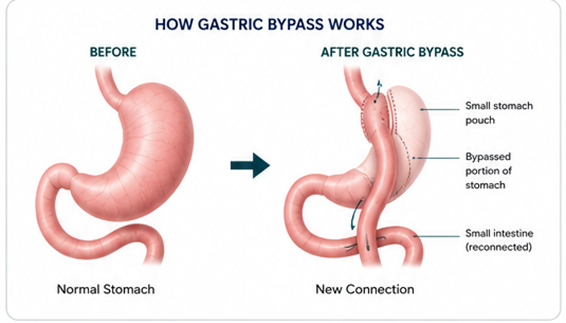
During Roux-en-Y gastric bypass, the surgeon creates a small stomach pouch and connects it directly to the small intestine. Food then travels through the pouch into the intestine, bypassing most of the stomach and the upper portion of the small intestine. Digestive juices continue to mix with food farther downstream.
A small stomach pouch limits the amount of food that can be eaten at one time.
Food bypasses most of the stomach and the first part of the small intestine.
Changes in gut hormones, appetite and metabolism contribute to weight loss and metabolic improvement.
Gastric bypass may be appropriate for selected patients who need substantial and durable weight loss, especially when obesity is associated with metabolic disease or significant reflux. The decision should always be individualized.
For selected patients with obesity and significant GERD, Roux-en-Y gastric bypass is often considered because it can improve reflux symptoms. This may be particularly important when choosing between gastric bypass and sleeve gastrectomy. The best operation depends on the patient’s anatomy, symptoms, medical history and overall goals.
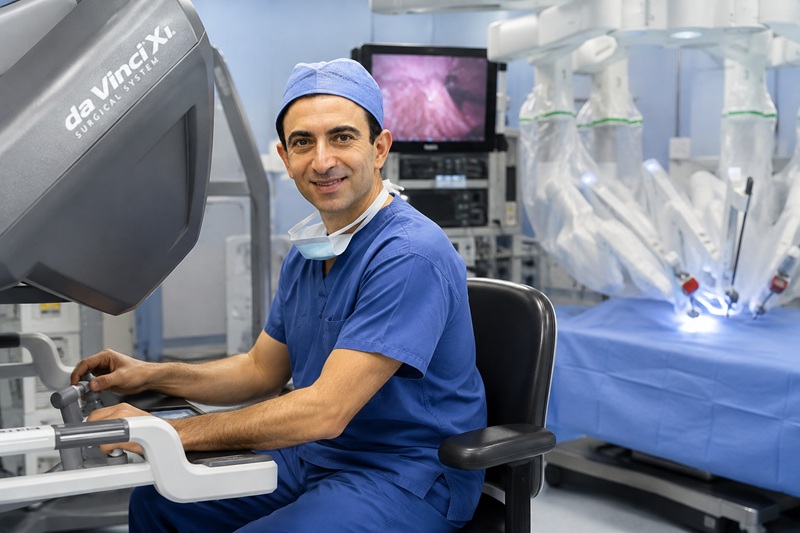
Gastric bypass may be performed using laparoscopic or robotic-assisted minimally invasive techniques. During robotic-assisted surgery, the surgeon remains completely in control of the operation. The robotic platform provides high-definition visualization and highly maneuverable instruments that may be useful for precise reconstruction, complex anatomy and selected revisional procedures.
Medical assessment, laboratory testing, nutrition counseling and preparation tailored to your health and insurance/program requirements.
A small stomach pouch is created and connected to the small intestine. The bypassed stomach remains in the body but no longer receives food directly.
Patients gradually advance from liquids to soft foods and then to a healthy long-term eating plan while activity increases step by step.
Ongoing nutrition care, vitamin and mineral supplementation, laboratory monitoring, medical follow-up and weight-management support are essential.
Gastric bypass is a powerful treatment, but long-term success requires a plan. Patients need lifelong attention to nutrition, adequate protein and hydration, recommended vitamin and mineral supplementation, regular physical activity, and periodic laboratory monitoring.
Because the procedure changes the way food and nutrients travel through the digestive system, long-term follow-up is particularly important.
Some patients experience symptoms known as dumping syndrome after gastric bypass, especially after foods high in sugar or certain refined carbohydrates. Symptoms may include abdominal discomfort, nausea, diarrhea, flushing, lightheadedness or a rapid heartbeat. Nutrition counseling and food choices can help reduce these symptoms.
Weight regain can occur after any bariatric procedure and should be evaluated without judgment. Possible contributors include nutrition patterns, medications, medical conditions, anatomy and metabolic adaptation. Treatment may include nutrition support, obesity medicine, anti-obesity medication, endoscopic therapy or revisional surgery depending on the cause.
As with any major operation, gastric bypass has potential risks. These can include bleeding, infection, blood clots, leak from a surgical connection, bowel obstruction, ulcers, internal hernia, narrowing at a connection, gallstones, nutritional deficiencies and the possible need for additional procedures. Because nutrient absorption is altered, lifelong vitamin and mineral supplementation and follow-up are essential.
Reversal is technically possible in selected situations but is complex; gastric bypass is generally intended as a permanent operation.
Gastric bypass has strong metabolic effects and can improve type 2 diabetes in many patients, although individual results vary.
Yes. Gastric bypass often improves significant GERD and may be preferred over sleeve gastrectomy in selected patients with reflux.
Yes. Lifelong vitamin and mineral supplementation and periodic laboratory monitoring are important.
Yes. Some patients develop symptoms after foods high in sugar or certain refined carbohydrates. Nutrition changes can reduce the risk.
Weight loss varies by individual. Outcomes depend on starting weight, health conditions, the operation and long-term nutrition, activity and follow-up.
The first step is a comprehensive evaluation. Treatment may include medical weight management, endoscopic therapy or revisional surgery depending on the cause.

For some patients, gastric bypass may be the best option. For others, sleeve gastrectomy or another treatment may be more appropriate.