

Obesity treatment is rapidly evolving. In addition to established bariatric surgery and medical weight management, newer endoscopic, device-based, and metabolic approaches are expanding the options available to selected patients.
This section is designed to help patients understand these technologies, where they may fit in the treatment spectrum, and an important distinction: some approaches are established and FDA-authorized for specific uses, while others remain investigational or have limited availability.
Our approach
We follow new technology closely, but we do not present every emerging procedure as established or routinely available. The appropriate treatment depends on evidence, regulatory status, patient selection, safety, and individual goals.
Modern obesity care can include medical therapy, endoscopic treatment, metabolic or bariatric surgery, and combinations of these approaches over time. The goal is to match the intensity and mechanism of treatment to the individual patient.

ESG is performed through the mouth using an endoscope and suturing system to reduce stomach volume without removing part of the stomach. FDA-authorized endoscopic suturing systems are available for weight loss in appropriately selected adults.

An intragastric balloon is placed in the stomach to occupy space and support earlier fullness as part of a structured weight-management program. FDA-approved balloon systems have specific indications, treatment durations, contraindications, and risks.

Magnetic systems are being studied as a way to create selected gastrointestinal connections using compression rather than conventional stapling or suturing. These approaches are promising, but obesity applications should be presented as emerging or investigational unless a specific system and indication have current regulatory authorization.
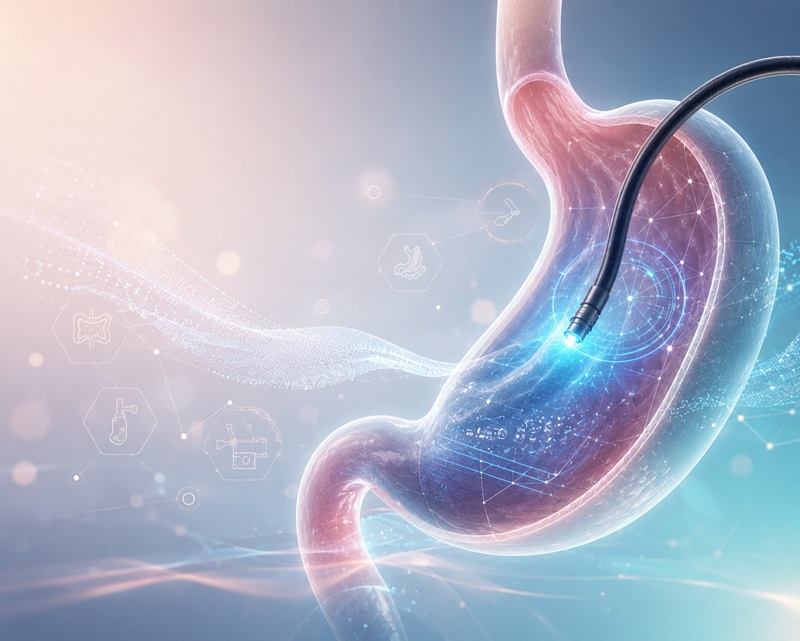
Researchers continue to study endoscopic revision techniques, small-bowel and duodenal therapies, novel devices, and other metabolic interventions designed to influence appetite, nutrient flow, glucose regulation, or weight without traditional surgery.
ESG occupies an important space between medication-only treatment and traditional bariatric surgery. During ESG, a flexible endoscope is passed through the mouth into the stomach. Full-thickness sutures are placed to reduce gastric volume and create a sleeve-like configuration.
No portion of the stomach is surgically removed, and there are no abdominal incisions. ESG still requires careful patient selection, anesthesia, dietary progression, follow-up, and long-term lifestyle and medical support.
Intragastric balloons are temporary devices placed inside the stomach to occupy space and help support reduced food intake. They are used as part of a broader program that includes dietary and behavioral support.
Different balloon systems have different instructions and regulatory histories. For example, the FDA-approved ORBERA system is indicated for selected adults with BMI 30–40 kg/m² and has a maximum placement period of six months.
Balloon therapy is less invasive than surgery, but it is not risk-free. Potential complications can include nausea, vomiting, abdominal pain, dehydration, balloon intolerance, ulceration, migration or deflation, and less common serious complications. Patients need appropriate follow-up and timely evaluation of concerning symptoms.
Magnetic compression anastomosis is an evolving concept in which paired magnets are positioned across segments of the gastrointestinal tract. The magnets compress the tissue between them, potentially creating a controlled connection as the tissue heals.
Clinical studies have evaluated magnetic anastomosis systems in metabolic and bariatric procedures, including duodeno-ileal diversion in patients with obesity. This technology is especially interesting because it may eventually reduce reliance on conventional stapled or hand-sewn anastomoses in selected procedures.
The field extends beyond ESG and balloons. New and evolving approaches may include:
Not all emerging technologies have the same level of evidence or regulatory status. Detailed pages should clearly distinguish FDA-authorized uses from investigational approaches and should be updated as evidence and approvals change.
The least invasive treatment is not automatically the best treatment, and the newest treatment is not automatically the best treatment. The right choice depends on the amount of weight reduction needed, weight-related medical conditions, previous treatment, prior surgery, anatomy, reflux symptoms, medication response, procedural risk, preferences, and long-term goals.
Some patients may benefit most from medical therapy. Others may be candidates for an endoscopic procedure, and some will achieve the most durable benefit from bariatric surgery. Treatment can also evolve over time.


No. ESG uses endoscopic sutures placed through the mouth to reduce stomach volume. Surgical sleeve gastrectomy removes a large portion of the stomach. They differ in anatomy, invasiveness, expected weight loss, risks, recovery, and long-term considerations.
No abdominal incisions are used for ESG. The procedure is performed through the mouth with an endoscope.
No. Balloon systems are temporary and must be removed according to the device-specific treatment schedule.
Magnetic anastomosis technologies are being studied in metabolic and bariatric applications. Availability and regulatory status depend on the specific device, procedure, and location. It should not be assumed to be routine standard treatment.
Less invasive access may reduce some aspects of procedural burden, but every treatment has specific risks and limitations. Safety depends on the technology, evidence, patient selection, operator experience, and follow-up.
In selected patients, endoscopic treatment and anti-obesity medication may be used as complementary strategies. The sequence and combination should be individualized.
Yes, selected patients with weight recurrence or anatomical changes after bariatric surgery may be candidates for endoscopic revision approaches. Evaluation depends on the original operation and current anatomy.

If you are interested in a less-invasive or emerging treatment, the first step is to understand your goals, medical history, previous treatment, and anatomy. We can then discuss whether medical therapy, an established endoscopic option, bariatric surgery, or an evolving technology is the most appropriate pathway.
This page is for general educational purposes and does not replace individualized medical advice. Some technologies discussed in this section may be investigational, may not be FDA-authorized for obesity treatment, or may not be available through this practice. Regulatory status, indications, evidence, and availability can change. Patients should discuss specific treatment options with a qualified clinician.
This draft was prepared using current U.S. FDA information on weight-loss and weight-management devices, including FDA-authorized endoscopic suturing systems for ESG and FDA-approved intragastric balloon systems, together with current registered clinical research on magnetic anastomosis technology in obesity. Regulatory status should be rechecked before publication and periodically thereafter.