

Revisional bariatric surgery is used to address problems after a previous weight-loss operation. Some patients seek revision because of weight regain or inadequate weight loss; others develop reflux, ulcers, strictures, device-related problems or other anatomical complications. The first step is not choosing another operation — it is understanding why the original treatment is no longer meeting the patient’s needs.

The key question is WHY. revision bariatric surgery should be based on the cause of the problem, not simply the number on the scale.
Revision is more complex than primary bariatric surgery. A thoughtful workup helps define the anatomy, identify the cause of symptoms or weight recurrence, and determine whether surgery, endoscopic therapy, medical weight management — or a combination — is most appropriate.
May be considered for significant reflux, inadequate weight loss, weight recurrence or selected sleeve-related problems.
May address specific anatomical problems such as an enlarged pouch or connection, complications, or selected cases of weight recurrence.
A band may be removed for intolerance, slippage, erosion or inadequate results; selected patients may later undergo sleeve gastrectomy or gastric bypass.
When reflux or other foregut symptoms drive the problem, treatment should be chosen based on anatomy and the cause of symptoms.
Some patients require individualized reconstructive procedures. The appropriate option depends on the prior operation, anatomy, health status and goals.
Two patients can have the same previous operation and need completely different treatment. The safest and most effective plan depends on the reason for revision, current anatomy, symptoms, medical conditions and long-term goals.
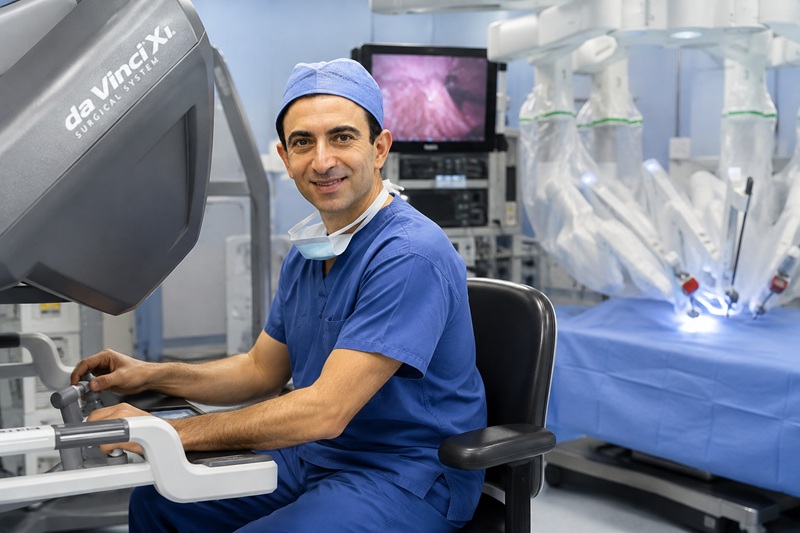
Many revisional procedures can be performed using minimally invasive laparoscopic or robotic-assisted techniques. Revisional operations may involve scar tissue, altered anatomy and reconstruction of prior surgical connections. Robotic technology provides high-definition visualization and highly maneuverable instruments that can be useful in selected complex cases. The surgeon remains completely in control of the operation.
A detailed evaluation identifies the original operation, current anatomy, cause of the problem, nutritional status and realistic treatment goals.
The operation is tailored to the individual. It may involve conversion to another bariatric procedure, reconstruction of existing anatomy, removal of a device or correction of a complication.
Recovery varies according to the complexity of the revision. Diet progression, activity and follow-up instructions are individualized.
Nutrition support, vitamin and mineral monitoring, obesity-medicine care and ongoing surgical follow-up are central to long-term success.
Weight regain does not automatically mean another operation is needed. The first step is to determine why weight has returned. Nutrition patterns, medications, metabolic adaptation, behavioral factors and anatomical changes can all contribute.
Depending on the findings, treatment may include nutrition counseling, anti-obesity medication, endoscopic treatment, behavioral support or revision bariatric surgery. A combined approach is often more useful than thinking of revision as a stand-alone procedure.
Reflux after bariatric surgery deserves a careful evaluation. Symptoms can be related to the type of prior operation, anatomy, hiatal hernia, motility or other foregut conditions. For selected patients with significant reflux after sleeve gastrectomy, conversion to Roux-en-Y gastric bypass may be considered. Treatment should be individualized after appropriate testing.
Revisional bariatric surgery is generally more complex than a first-time bariatric operation. Risks vary by procedure and may include bleeding, infection, blood clots, leak, ulcer, narrowing, bowel obstruction, injury to nearby structures, nutritional deficiencies, need for additional procedures and the possibility that weight or symptom goals are not fully achieved. The specific risks and alternatives should be reviewed in detail before surgery.
Revision is often more technically complex because of scar tissue and altered anatomy. Individual risk depends on the prior operation, planned revision and overall health.
The answer comes from a complete evaluation of the original operation, current anatomy, symptoms, health conditions and goals.
For selected patients with significant reflux after sleeve, conversion to Roux-en-Y gastric bypass may be considered after appropriate evaluation.
Results vary substantially according to the reason for revision and the procedure performed. A personalized discussion is more useful than a single expected number.
Yes. Anti-obesity medication and medical weight management may be appropriate alone or together with endoscopic or surgical treatment.
Coverage varies by insurance plan and the medical reason for revision. Documentation and plan-specific requirements may apply.
Many revisional procedures require lifelong supplementation and laboratory monitoring; the exact regimen depends on the anatomy and procedure.
The goal is not simply another operation. It is to understand what changed and build the safest, most effective path forward.