

Gastroesophageal reflux disease (GERD) occurs when stomach contents repeatedly flow back into the esophagus and cause troublesome symptoms or complications. Common symptoms include heartburn and regurgitation, but GERD can also contribute to chest discomfort, cough, throat symptoms, sleep disturbance, or difficulty swallowing.
Symptoms alone do not always prove that reflux is the cause. When symptoms are persistent, atypical, or being considered for a procedure, objective evaluation can be important.
The esophagus passes through an opening in the diaphragm called the hiatus before joining the stomach. A hiatal hernia occurs when part of the stomach, and sometimes the gastroesophageal junction or other abdominal structures, moves upward through this opening.
The most common form is a sliding hiatal hernia. Larger paraesophageal hernias can involve more of the stomach and may cause reflux, pressure, chest discomfort, early fullness, swallowing difficulty, anemia, obstruction, or other symptoms.
GERD and hiatal hernia are related—but not identical.
A hiatal hernia can weaken the normal antireflux barrier and contribute to GERD, but not every hiatal hernia causes symptoms and not every patient with GERD has a clinically significant hiatal hernia.
The evaluation is tailored to the patient’s symptoms, prior treatment, anatomy, and whether a procedure is being considered.
Before antireflux surgery
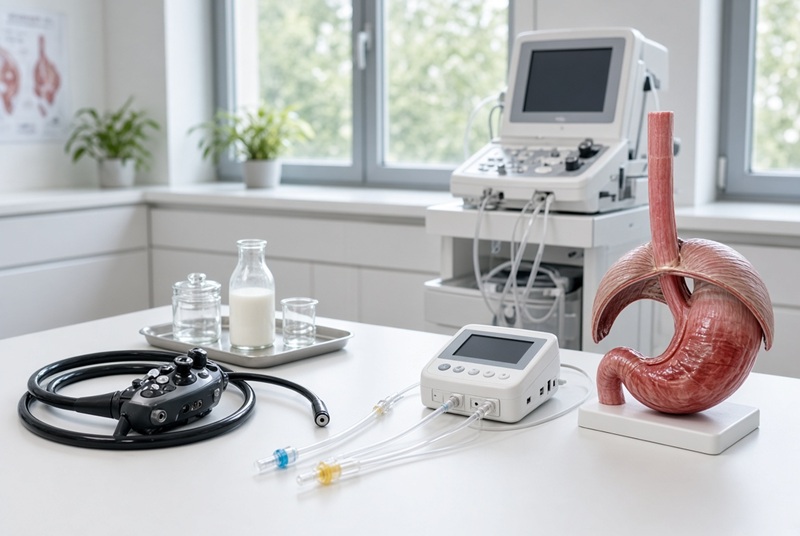
Current multisociety guidance emphasizes objective evaluation. Upper endoscopy, reflux testing, and esophageal manometry may each answer a different question and help select the right procedure.
Many patients with GERD can be managed without surgery. Treatment may include:
Antireflux or hiatal hernia surgery may be considered when there is confirmed chronic or refractory GERD, significant anatomic disruption, troublesome regurgitation despite appropriate treatment, medication intolerance or preference in selected patients, or a symptomatic hiatal/paraesophageal hernia.
The decision is individualized. Surgery should address the underlying anatomy and physiology rather than being based on symptoms alone.
During minimally invasive hiatal hernia repair, the stomach and gastroesophageal junction are restored to the appropriate position and the opening in the diaphragm is repaired. Depending on the hernia and reflux physiology, an antireflux procedure is commonly added.
Current SAGES guidance suggests that patients undergoing repair of type II, III, or IV hiatal hernias may benefit from fundoplication, while recognizing that the evidence is not equally strong for every technical decision.
Fundoplication reinforces the antireflux barrier by wrapping part of the upper stomach around the lower esophagus. A complete fundoplication and several partial fundoplication techniques are available.
The choice between complete and partial fundoplication should account for reflux control, swallowing function, the risk of postoperative dysphagia or gas-bloat symptoms, anatomy, and patient preferences. Current surgical guidelines support shared decision-making rather than a single wrap for every patient.
Magnetic sphincter augmentation is another antireflux option for selected patients with objectively confirmed GERD. It is different from fundoplication and will be covered on the dedicated Antireflux Surgery page together with candidacy, benefits, limitations, and comparison with fundoplication.
Obesity can increase reflux pressure and can affect the choice of antireflux procedure. In patients with obesity and significant GERD, the treatment discussion may include weight management, fundoplication in selected cases, or Roux-en-Y gastric bypass when bariatric surgery is otherwise appropriate.
The bariatric operation matters
For patients with obesity and significant reflux, procedure selection should consider both weight and reflux. Roux-en-Y gastric bypass can be particularly useful in appropriately selected patients, while sleeve gastrectomy can worsen or create reflux in some patients.
New or worsening reflux after sleeve gastrectomy deserves a structured evaluation. Potential contributors include hiatal hernia, sleeve anatomy, narrowing or twisting, increased intragastric pressure, and pre-existing reflux disease.
Treatment can range from medication and lifestyle measures to repair of a hiatal hernia or conversion to Roux-en-Y gastric bypass in selected patients. The correct approach depends on anatomy, objective findings, symptoms, weight trajectory, and prior treatment.
Chest pain can have causes unrelated to the esophagus, including heart disease. New or severe chest pain should be evaluated appropriately rather than assumed to be reflux.
No. Management depends on the type and size of the hernia, symptoms, reflux, anatomy, and risk of complications. Some hernias can be observed.
Yes. A hiatal hernia can disrupt the normal antireflux barrier and contribute to GERD, although the two conditions are not identical.
Not always. In many patients, the antireflux barrier also needs to be addressed. Procedure selection depends on the hernia, reflux testing, motility, and other factors.
Some appropriately selected patients can achieve durable symptom control with an antireflux procedure, but no procedure guarantees permanent freedom from medication or recurrent symptoms.
Manometry evaluates how the esophagus moves and helps identify major motility disorders. This can affect which antireflux procedure is appropriate.
Possibly, but obesity changes the treatment discussion. For some patients, a bariatric procedure—particularly Roux-en-Y gastric bypass—may address both obesity and GERD more effectively.
Both approaches can be appropriate. Current guidelines support either robotic or laparoscopic fundoplication based on surgeon expertise, patient factors, and shared decision-making.

A focused foregut evaluation can clarify whether symptoms are due to GERD, a hiatal hernia, altered anatomy, a motility disorder, or another cause—and whether medical, endoscopic, or surgical treatment is most appropriate.
This page is for general educational purposes and does not replace individualized medical advice. Diagnostic testing and treatment depend on symptoms, anatomy, objective findings, medical history, and current clinical guidance. All procedures have potential risks and benefits.
Content was prepared with current SAGES guidance for surgical treatment of GERD, the multisociety GERD consensus guideline, and the 2024 SAGES guideline for surgical treatment of hiatal hernias. Clinical recommendations should be reviewed periodically as guidelines evolve.