

For selected patients with objectively confirmed gastroesophageal reflux disease (GERD), an antireflux procedure can restore or reinforce the barrier between the stomach and esophagus. Two important approaches are fundoplication and LINX magnetic sphincter augmentation.
The right procedure starts with the right diagnosis.
Antireflux surgery should not be chosen from symptoms alone. Anatomy, objective reflux testing, swallowing function, hiatal hernia, prior surgery, BMI, and patient priorities all matter.
Preoperative evaluation is individualized, but may include upper endoscopy, ambulatory reflux monitoring, esophageal manometry, and contrast imaging. These tests answer different questions: Is reflux truly present? Is there a hiatal hernia? Does the esophagus move normally? Is there another condition causing the symptoms?
Manometry matters
Esophageal manometry helps identify major motility disorders and provides information that can influence procedure selection and postoperative swallowing risk.
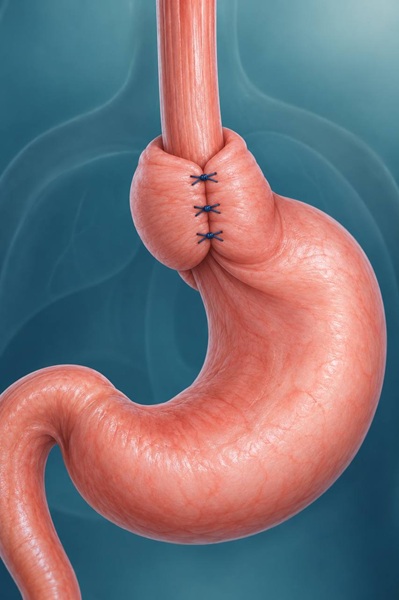
Fundoplication uses the patient’s own upper stomach to reinforce the lower esophageal sphincter. It is usually performed laparoscopically or robotically, often together with hiatal hernia repair when a hernia is present.
A complete fundoplication wraps the stomach fully around the lower esophagus. Partial fundoplication techniques create a less-complete wrap. Both can provide effective reflux control.
Current surgical guidance supports individualized selection. A complete wrap may prioritize reflux control, while a partial wrap may be favored when minimizing postoperative swallowing difficulty is particularly important.
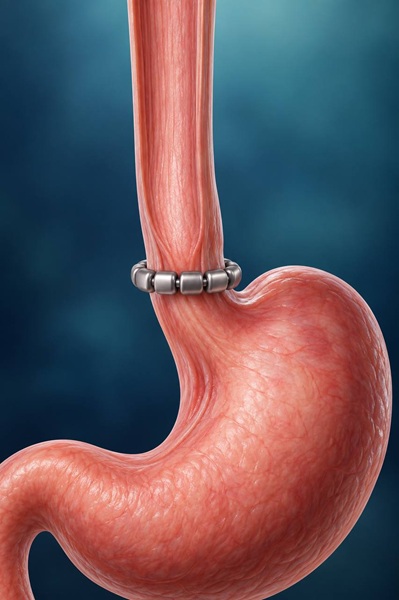
The LINX Reflux Management System is a small ring of interlinked titanium beads with magnetic cores placed around the lower esophageal sphincter. Magnetic attraction helps augment closure of the gastroesophageal junction, while the ring expands to allow swallowing.
LINX is an FDA-approved device for appropriate patients with GERD as defined by abnormal pH testing who continue to have chronic GERD symptoms despite maximum medical therapy.
MRI considerations
Patients with LINX should tell radiology and other clinicians that they have an implanted device. MRI eligibility must be checked against the exact device model and current manufacturer/FDA labeling rather than assumed.
| Consideration | Fundoplication | LINX |
|---|---|---|
| Basic concept | Uses upper stomach to create an antireflux wrap | Magnetic ring augments the lower esophageal sphincter |
| Implant | No antireflux device implant | Permanent device unless removed |
| Hiatal hernia | Can be repaired during the same operation | Can also be repaired when indicated |
| Belching / vomiting | May be more limited after some fundoplications | Often better preserved, though individual results vary |
| Dysphagia | Possible; risk depends on patient and technique | Common early concern; some patients need dilation or removal |
| Long-term experience | Extensive, decades-long surgical experience | Newer than fundoplication but supported by substantial clinical experience |
| MRI | No LINX-related MRI restriction | Must follow model-specific MR-conditional requirements |
| Best fit | Depends on anatomy, motility, reflux pattern and preferences | Depends on anatomy, objective GERD, device eligibility and preferences |
A hiatal hernia is addressed separately from the choice of antireflux mechanism. When clinically significant, the stomach and gastroesophageal junction are restored to the appropriate position and the diaphragmatic hiatus is repaired. Fundoplication or magnetic sphincter augmentation may then be used in appropriately selected patients.
Large or complex paraesophageal hernias require individualized surgical planning.
BMI and weight-related disease matter when selecting an antireflux procedure. In patients with obesity—especially when substantial weight loss is also a treatment goal—Roux-en-Y gastric bypass may be an important alternative because it can address both obesity and reflux.
This is particularly relevant for patients with GERD after sleeve gastrectomy, where conversion to Roux-en-Y gastric bypass may be considered in selected cases.
Both fundoplication and LINX are commonly performed with minimally invasive techniques. Recovery varies by procedure and patient. A temporary modified diet is often used while swelling resolves and swallowing adapts.
After LINX, the postoperative eating strategy may differ from the traditional progression used after fundoplication, so patients should follow the procedure-specific instructions from their treating team.
There is no universal winner.
Fundoplication and LINX can both be effective in appropriately selected patients. The better choice is the one that best matches the patient’s anatomy, physiology, risks, and goals.
Not for everyone. Both can be effective. Selection depends on objective reflux testing, anatomy, motility, prior surgery, BMI, device eligibility, and patient priorities.
Many patients reduce or stop acid-suppressing medication, but no procedure guarantees that medication will never be needed again.
Yes, the device can be removed when clinically necessary, but removal requires another procedure and should not be described as making the original treatment trivial or completely reversible.
Some LINX models are MR conditional. The exact implanted model and current device labeling must be checked before MRI.
Yes, hiatal hernia repair can be performed when indicated as part of the operation.
There is no single wrap that is best for every patient. Complete versus partial fundoplication should be individualized based on reflux control, swallowing function, anatomy, and patient preferences.
The discussion may include bariatric options such as Roux-en-Y gastric bypass, particularly when meaningful weight loss is also needed.
Reflux after sleeve requires evaluation of the sleeve anatomy, hiatal hernia, esophagus, and objective reflux. Revision or conversion to Roux-en-Y gastric bypass may be appropriate in selected patients.

A focused foregut evaluation can determine whether your symptoms are truly caused by reflux and whether fundoplication, LINX, another treatment, or continued medical therapy best fits your situation.
This page is for general educational purposes and does not replace individualized medical advice. Device eligibility, surgical candidacy, risks, benefits, MRI conditions, and expected outcomes depend on the individual patient and current product labeling and clinical guidance.
This draft is intended to align with current U.S. clinical guidance on antireflux surgery and current FDA/manufacturer labeling for the LINX Reflux Management System. Device labeling, MRI conditions, indications, and clinical recommendations should be verified immediately before publication and reviewed periodically.