EMERGING / INVESTIGATIONAL
Magnetic anastomosis technology for bariatric and metabolic procedures should currently be presented as emerging or investigational—not as a routine obesity treatment available to every patient.
Magnetic compression anastomosis is an evolving technique designed to create a connection between segments of the gastrointestinal tract using paired magnets. When positioned across two bowel segments, the magnets compress the tissue between them; over time, the compressed tissue remodels and a new connection can form.
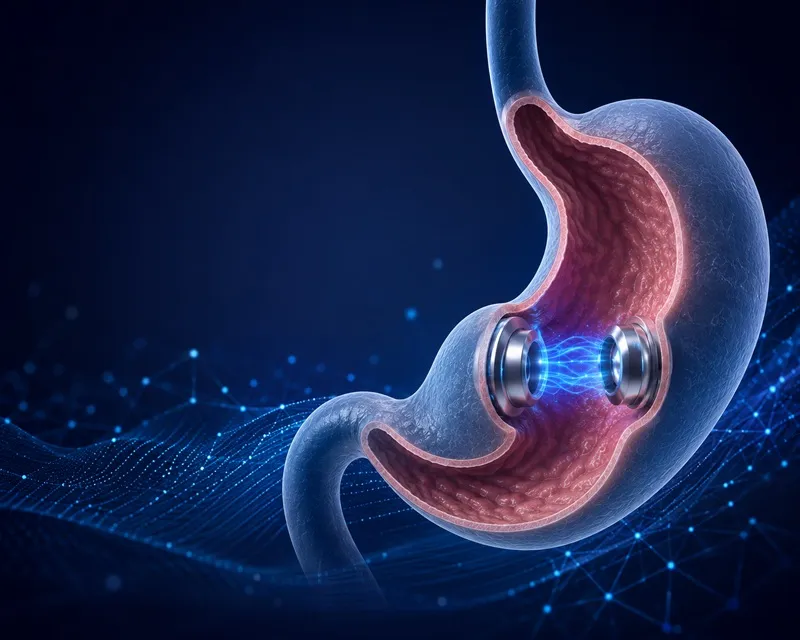
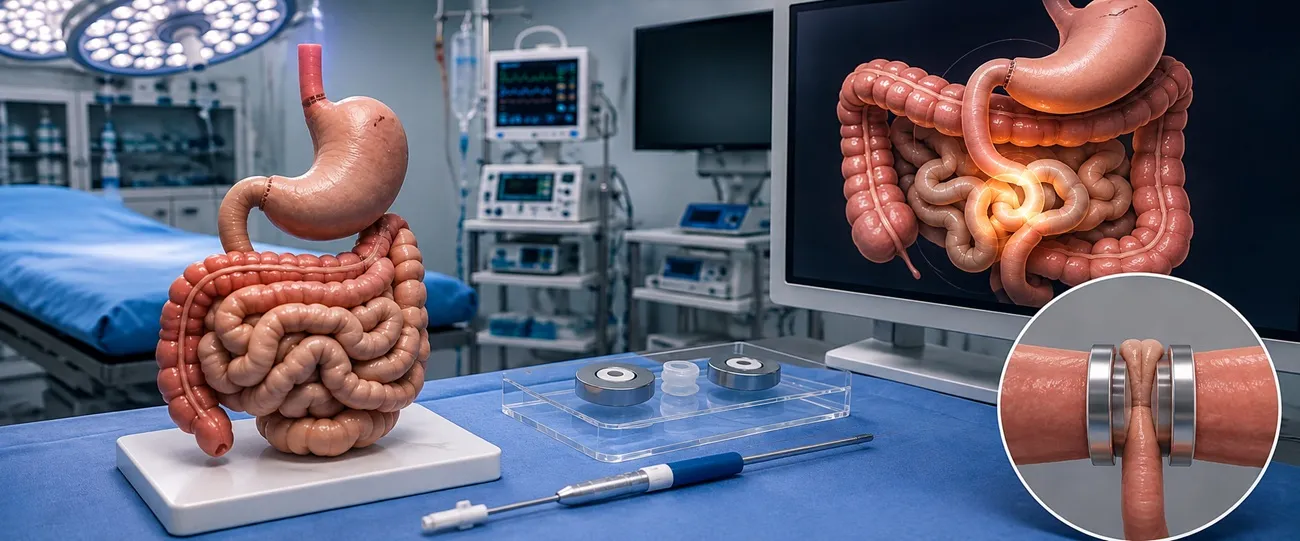
Clinical research has evaluated bio-fragmentable magnetic anastomosis systems for creation of a side-to-side duodeno-ileostomy in adults with obesity. One registered U.S. feasibility study evaluated the GT Metabolic Solutions magnetic system for this purpose.
Established bariatric operations use well-defined surgical techniques, including stapling, division, suturing, and conventional anastomoses when required. Magnetic technology attempts to accomplish selected anastomotic steps through controlled compression. It does not mean that an entire bariatric operation becomes incisionless or risk-free.
Patients increasingly hear about new obesity procedures through social media, news reports, clinical trials, and industry announcements. A physician-led educational page can explain what is promising while clearly separating research from established care.
The key message for patients
New does not automatically mean better, and less invasive does not automatically mean lower risk. Emerging technologies should be evaluated according to evidence, regulatory status, operator experience, durability, and the patient’s individual needs.
Do not assume so. Regulatory status is specific to the device and indication. Current bariatric magnetic-anastomosis applications should be presented as emerging/investigational unless a specific authorization is verified.
That depends on the system being studied. Some investigational systems are designed so magnetic components ultimately separate or fragment rather than remain as a permanent implant.
No. Magnetic technology is a method for creating a gastrointestinal connection; it may be studied as part of a metabolic procedure, but it is not itself synonymous with an established bariatric operation.
Availability depends on regulatory status, clinical trials, institutions, and the specific technology. The website should invite patients to discuss emerging options without promising access.
If validated, magnetic anastomosis could become another tool for performing selected metabolic procedures. Long-term evidence will determine where it ultimately fits.
This page discusses investigational and emerging technology for educational purposes. It does not imply FDA authorization, routine availability, or that a particular magnetic procedure is offered by this practice. Regulatory status and clinical evidence should be verified before publication and before any patient-facing claim.
Prepared using current ClinicalTrials.gov information on magnetic duodeno-ileal anastomosis feasibility research in adults with obesity. Because this field is evolving, all device names, indications, trial status, regulatory claims, and availability should be rechecked before publication.