Endoscopic sleeve gastroplasty, or ESG, is an endoscopic weight-loss procedure performed through the mouth. Using a flexible endoscope and a specialized suturing system, the physician places full-thickness sutures in the stomach to reduce its usable volume and create a sleeve-like configuration—without removing part of the stomach and without abdominal incisions.
FDA-authorized technology
The APOLLO ESG family of endoscopic suturing systems is FDA-authorized for trained gastroenterologists or bariatric surgeons to facilitate weight loss in adults with obesity and BMI 30–50 kg/m² who have not been able to lose weight, or maintain weight loss, with more conservative measures.
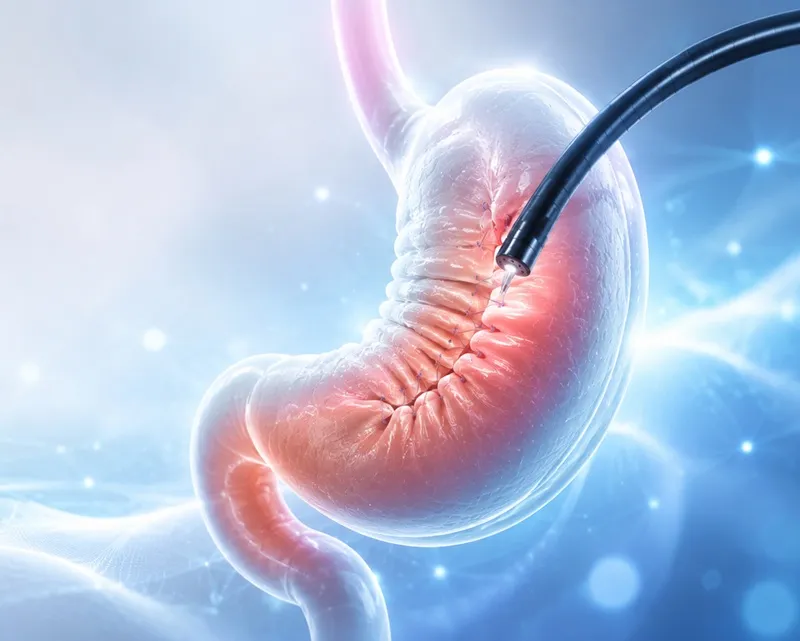
ESG and sleeve gastrectomy both reduce functional stomach capacity, but they are fundamentally different procedures. ESG reshapes the stomach internally with endoscopic sutures. Surgical sleeve gastrectomy removes a large portion of the stomach. Surgery generally produces greater average weight loss, while ESG offers a less invasive anatomy-preserving option for selected patients.
ESG can produce clinically meaningful weight loss, but results vary. Outcomes depend on starting weight, anatomy, adherence to dietary progression, physical activity, behavioral changes, medications when appropriate, and long-term follow-up. The website should avoid guaranteeing a specific percentage for an individual patient.
Most patients follow a staged dietary progression after ESG, beginning with liquids and advancing gradually as directed by the treating team. Temporary nausea, abdominal discomfort, cramping, or reflux symptoms can occur. Recovery and return to normal activity vary by patient and procedural course.
For selected patients, anti-obesity medication may complement an endoscopic treatment strategy. The sequence and combination should be individualized rather than presented as routine for every patient.
Coverage for ESG varies substantially among insurance plans. Some patients may have coverage while others may face exclusions or self-pay requirements. Medical candidacy and insurance coverage should be evaluated separately.
ESG is an endoscopic procedure rather than traditional abdominal surgery. It is performed through the mouth and does not remove stomach tissue.
There are no abdominal incisions, so ESG does not create external surgical scars.
ESG preserves the stomach, but it should not be marketed simply as a fully reversible procedure. Sutures can sometimes be revised or removed endoscopically, and anatomy can change over time.
In selected patients, bariatric surgery may still be possible after ESG. Future treatment depends on anatomy, health, goals, and prior response.
Yes. Long-term nutrition, behavioral, and medical follow-up are central to durable success.
This page is educational and does not replace individualized medical advice. Candidacy, risks, expected outcomes, availability, and insurance coverage vary. Device labeling and regulatory status may change.
Prepared using current U.S. FDA device information for endoscopic suturing systems for altering gastric anatomy for weight loss, including APOLLO ESG systems. Regulatory status should be rechecked before publication.