

Sleeve gastrectomy is one of the most commonly performed bariatric procedures. It reduces the size of the stomach while allowing food to continue through the digestive system in its normal direction. The operation can support substantial weight loss by limiting portion size and changing hormonal signals involved in hunger, appetite and metabolism.
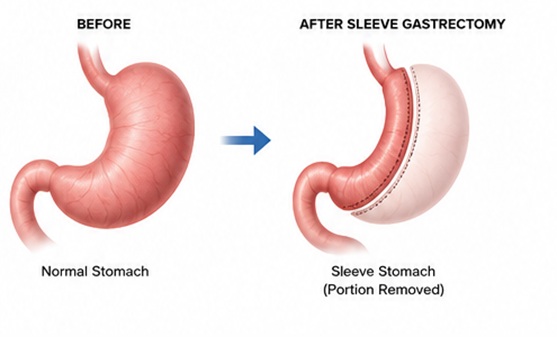
During sleeve gastrectomy, a large portion of the stomach is removed, leaving a smaller, tube-shaped stomach or “sleeve.” The intestines are not rerouted. The smaller stomach helps patients feel full with smaller meals, while hormonal changes may reduce hunger and improve metabolic health.
A large portion of the stomach is removed, leaving a narrow sleeve-shaped stomach.
The smaller stomach limits meal size and helps fullness occur sooner.
Changes in hunger and appetite signals, including ghrelin, can support weight loss.
Sleeve gastrectomy may be considered for patients with obesity when surgery is appropriate after an individualized evaluation. The decision is based on overall health, weight history, obesity-related conditions, prior treatment, anatomy, goals and readiness for long-term follow-up.
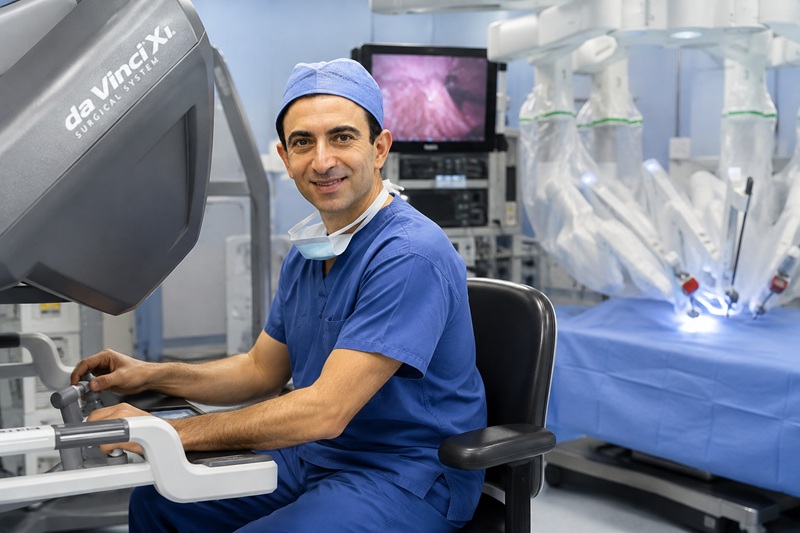
When appropriate, sleeve gastrectomy may be performed using a robotic-assisted surgical platform. The robot does not perform the operation independently. Dr. Anoosh remains in complete control of the procedure, using the platform to translate his hand movements into precise movements of specialized instruments.
Sleeve gastrectomy can worsen or newly cause gastroesophageal reflux in some patients. Patients with significant GERD, Barrett’s esophagus, hiatal hernia or other foregut concerns should be evaluated carefully before choosing a procedure. For some patients, another bariatric operation may be more appropriate.
Medical evaluation, nutrition guidance, required testing and preparation tailored to your health and treatment plan.
The operation is performed under general anesthesia. Most of the stomach is removed to create the sleeve; the intestines remain in their normal pathway.
Diet advances gradually from liquids to soft foods and then to a long-term eating plan. Activity increases step by step.
Ongoing visits, nutrition, laboratory monitoring, vitamin supplementation and attention to weight and metabolic health remain important.
Surgery is a powerful treatment tool, but long-term success depends on continued care. Patients are encouraged to build sustainable nutrition and activity habits, take recommended vitamins and minerals, complete periodic laboratory testing and stay connected with the bariatric and obesity medicine team.
Weight regain can occur and should be evaluated without judgment. Nutrition, lifestyle, medications, anatomy, hormonal factors and the original operation can all contribute. Depending on the cause, treatment may include medical weight management, anti-obesity medication, endoscopic therapy or revisional surgery.
As with any major operation, sleeve gastrectomy has potential risks. These can include bleeding, infection, staple-line leak, blood clots, reflux, narrowing or obstruction, nutritional deficiencies and the possible need for additional procedures. Individual risks, benefits and alternatives should be reviewed with the surgical team.
Because part of the stomach is permanently removed, sleeve gastrectomy is generally considered non-reversible.
No. Food continues through the intestines in the normal direction.
Many patients notice changes in hunger and appetite after surgery, although the response varies.
Weight loss and metabolic changes after surgery can improve type 2 diabetes and other obesity-related conditions in many patients.
Reflux may improve in some patients but can worsen or develop after sleeve gastrectomy. Preoperative evaluation is important.
Long-term vitamin and mineral supplementation and periodic laboratory monitoring are generally recommended.
The cause should be evaluated. Additional treatment may include nutrition support, obesity medicine, medication, endoscopic treatment or revisional surgery.

Learn about the full range of medical, endoscopic and surgical options for obesity.