

Understanding GLP1 treatment for weight and metabolic health
Semaglutide is a GLP1 receptor agonist. It acts on pathways involved in appetite, fullness, food intake, and glucose regulation. For appropriate patients, semaglutide can be one component of a comprehensive medical weight-management plan that also includes nutrition, physical activity, and ongoing medical follow-up.
Patients often ask: “Is Wegovy the same as Ozempic?”
Both contain semaglutide, but they are different branded products with different FDA-approved indications and labeling. Wegovy includes FDA indications for chronic weight management in appropriate patients. Ozempic is FDA-approved for adults with type 2 diabetes and also has cardiovascular and kidney-related indications in certain adults with type 2 diabetes. A medical evaluation determines which product, if any, is appropriate.
This distinction matters. The goal of your visit is not simply to request a brand name; it is to select treatment based on your health, diagnosis, goals, safety considerations, and insurance coverage.
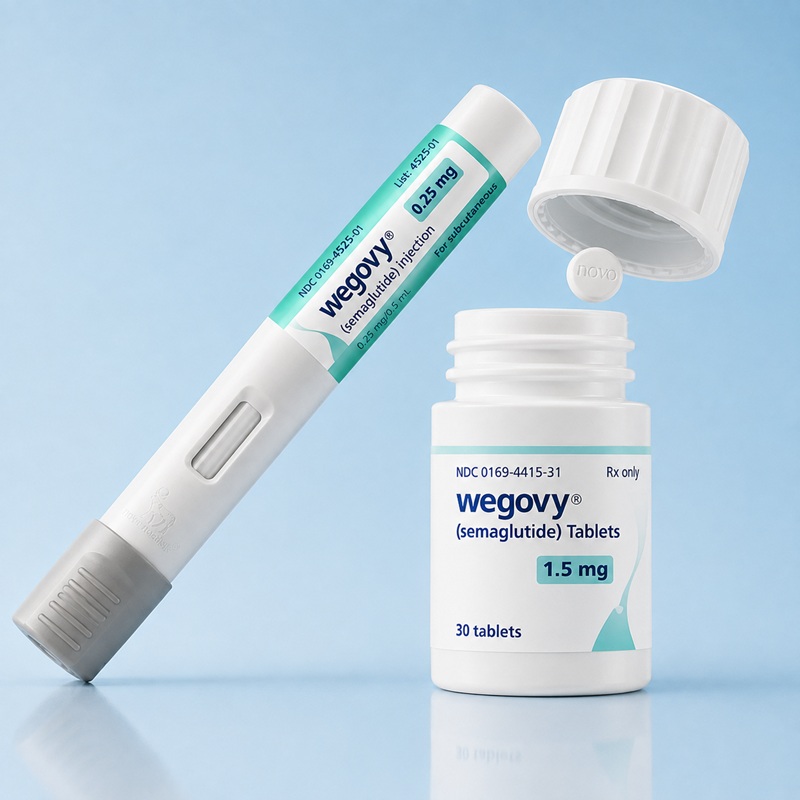
Wegovy is FDA-approved for long-term weight reduction in adults with obesity, and in adults with overweight who have at least one weight-related condition. Wegovy injection also has pediatric and additional indications that are outside the primary focus of this adult telemedicine program.
Whether semaglutide is appropriate depends on a full medical evaluation, including weight history, health conditions, current medications, previous treatment, pregnancy plans, gastrointestinal history, and other safety considerations.
Wegovy is available as a once-weekly injection and, for adults, as a once-daily tablet. Both contain semaglutide, but the formulations have different administration instructions and dose-escalation schedules.
Important
The oral tablet is not simply the injectable dose placed into a pill. Patients should follow the formulation-specific prescribing and administration instructions provided by their clinician and pharmacy.
Semaglutide treatment is generally started at a lower dose and increased gradually according to the FDA-approved regimen and individual tolerability. Gradual dose escalation helps the body adjust and may reduce gastrointestinal side effects.
The exact formulation, dose, timing, and escalation plan should be individualized. The website should not be used as a substitute for prescription instructions.
Clinical trials of Wegovy have shown clinically meaningful average weight reduction when semaglutide is used together with reduced-calorie nutrition and increased physical activity. Individual results vary considerably. Starting weight, medical conditions, treatment adherence, tolerability, nutrition, activity, and duration of treatment can all influence outcomes.
Rather than promising a specific percentage of weight loss, our program focuses on measurable health progress and a treatment plan that can be adjusted over time.
Gastrointestinal symptoms are the most common side effects of semaglutide. Depending on the formulation and patient, these may include:
Side effects are often most noticeable during dose escalation. Persistent, severe, or concerning symptoms should be discussed promptly with the treating clinician.
Boxed Warning
Wegovy and Ozempic carry a boxed warning regarding thyroid C-cell tumors observed in rodents. It is not known whether semaglutide causes medullary thyroid carcinoma in humans. Semaglutide products are contraindicated in patients with a personal or family history of medullary thyroid carcinoma (MTC) or Multiple Endocrine Neoplasia syndrome type 2 (MEN 2).
❇︎ Other important warnings and precautions can include pancreatitis, gallbladder disease, kidney injury related to dehydration, severe gastrointestinal adverse reactions, hypoglycemia when used with certain diabetes medications, diabetic retinopathy complications in some patients with diabetes, hypersensitivity reactions, and aspiration risk around anesthesia or deep sedation. Patients should tell their clinician about all medications, medical conditions, and planned procedures.
❇︎ Semaglutide should not be used during pregnancy for weight loss. Patients planning pregnancy should discuss when to stop semaglutide with their clinician; FDA labeling advises discontinuation at least two months before a planned pregnancy because semaglutide remains in the body for an extended period.
Insurance coverage for Wegovy and other obesity medications varies significantly by plan. Some plans cover anti-obesity medications, some require prior authorization or documentation of specific criteria, and others exclude weight-management medications.
When semaglutide is medically appropriate, our team can help address applicable prior-authorization requirements. Coverage and out-of-pocket cost cannot be guaranteed.
A denial does not mean that treatment stops. Your physician can review the reason for denial, discuss whether an appeal or prior authorization is appropriate, and consider other evidence-based treatment options based on your medical history and coverage.
Obesity is a chronic disease, and weight regain can occur after effective treatment is stopped. Before discontinuing medication, it is useful to discuss why treatment is being stopped and what long-term maintenance strategy will replace or follow it. Treatment duration should be individualized rather than based on a fixed short-term course.
Yes. Many patients arrive with a particular medication in mind. Your physician will review the differences and determine whether semaglutide—and which formulation or product—is medically appropriate.
Ozempic contains semaglutide but its FDA-approved indications are for adults with type 2 diabetes, including certain cardiovascular and kidney-risk indications. Wegovy is the semaglutide product with FDA indications that include chronic weight management.
Yes. Wegovy tablets are FDA-approved for chronic weight management in appropriate adults and for cardiovascular risk reduction in certain adults with established cardiovascular disease and obesity or overweight.
There is no single treatment duration that applies to everyone. Obesity is chronic, and ongoing treatment may be appropriate for some patients. The decision depends on effectiveness, tolerability, health goals, access, and alternatives.
No. FDA labeling does not recommend using Wegovy with another semaglutide-containing product or another GLP-1 receptor agonist.
This program is designed around FDA-approved prescription treatment options. Treatment is selected after medical evaluation.
Laboratory testing is individualized based on medical history, current conditions, medications, and clinical needs.
Semaglutide may be considered for selected patients with weight recurrence or inadequate weight loss after bariatric surgery, but post-bariatric treatment should be individualized.

Start with a physician-led telemedicine evaluation. We will review your health, goals, treatment history, medication options, safety considerations, and insurance coverage to determine the most appropriate next step.
This page is for general educational purposes and does not replace individualized medical advice. Prescription medications have potential benefits, side effects, contraindications, warnings, and drug interactions. Treatment decisions are made after an appropriate medical evaluation. FDA labeling, availability, and insurance coverage may change.
Website content checked against current U.S. FDA prescribing information for Wegovy (semaglutide) injection/tablets and Ozempic (semaglutide) injection, August 2026. The detailed prescribing information should be reviewed periodically as labeling changes.